



The Fourth Industrial Revolution: Understanding Industry 4.0
Since the 18th century, humanity has experienced several industrial revolutions, each driven by a major technological breakthrough. The first industrial revolution was powered by the steam engine, fundamentally changing the way industrial production was organized. The second introduced electricity and assembly lines, while the third relied on computing and automation. Today, the fourth industrial revolution—also called Industry 4.0 or advanced manufacturing—is built on the integration of digital technologies, the industrial internet, and artificial intelligence. This digital transformation will impact how products are designed, produced, and managed in the factories of the future for years to come.
Defining Industry 4.0 and Its Core Technologies
Industry 4.0 refers to a connected production system that leverages advanced digital technologies such as the Internet of Things (IoT), big data, cloud computing, and smart sensors. In this new environment, every machine and industrial device becomes a connected object capable of collecting and transmitting real-time data about its condition, performance, and surrounding ecosystem.
The sheer volume and frequency of this continuous data flow form a new analytical foundation that enables constant system monitoring, optimal understanding, and immediate response in the event of an issue. Using this data—often vast in quantity—companies can deploy predictive analytics models and machine learning algorithms to forecast breakdowns, optimize resource use, and enhance end-to-end production performance.
This paradigm also relies on tools like the digital twin—a virtual replica of a process, product, or entire factory—allowing organizations to simulate, test, and adjust parameters without disrupting actual production. Meanwhile, cyber-physical systems integrate the physical and digital worlds into a unified structure, ensuring smooth communication between equipment, industrial management software, and human interfaces. These systems lay the foundation for an agile, intelligent, and deeply transformed production environment.
From Connected Production to the Smart Factory
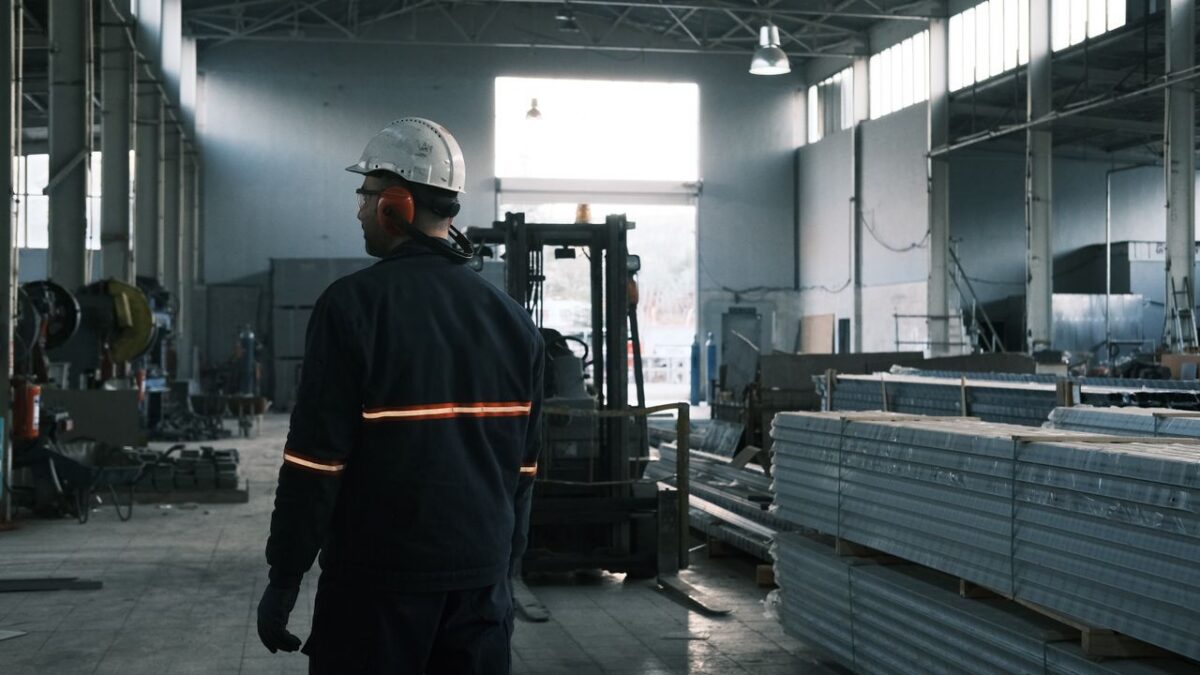
In a smart factory, every component of the industrial ecosystem—machines, sensors, software, and operator interfaces—constantly communicates with cloud platforms and edge computing systems. This hybrid architecture processes critical data locally while delegating more complex or less time-sensitive analyses to remote servers.
Combining reactivity with computational power, this distributed approach orchestrates operations more precisely, reduces errors significantly, and improves responsiveness to unexpected events. By harnessing these technologies, smart factories anticipate, adapt, and optimize processes continuously while guaranteeing full traceability.
The concept of the smart factory reaches its peak with mass customization, now a core market demand. Unlike traditional manufacturing, which prioritized standardization to minimize costs, smart factories combine flexibility and efficiency. Advanced robotics, modular automation, and artificial intelligence enable on-demand production adjustments, real-time parameter changes on production lines, and maintenance operations without halting activity. This model radically reshapes the relationship between production, customer expectations, and innovation.
Opportunities and Challenges for SMEs and Mid-Sized Companies
Transitioning to Industry 4.0 is a strategic opportunity, especially for SMEs and mid-sized companies. By adopting digital technologies, they can boost competitiveness, cut costs, and deliver greater added value. However, this revolution also introduces significant challenges.
Cybersecurity becomes a critical priority as industrial systems connect to the internet and face external threats, making it essential to safeguard data and real-time decision-making capabilities.
Additionally, the demand for training is rising sharply: employees must acquire new skills that combine digital expertise, predictive diagnostics, and advanced analytics. Job roles will evolve, requiring upskilling and organizational restructuring to enable seamless collaboration between humans and machines.
Future Perspectives: Growth, Sustainability, and Transformation
Industry 4.0 is not simply about digitizing production processes. It represents a radical transformation of businesses and the entire value chain. From an environmental perspective, optimized processes and controlled consumption aimed at reducing energy use have never been more critical. Innovations such as the recovery of rare raw materials, integration of additive manufacturing, and intelligent energy management challenge traditional production and consumption models.
In a rapidly evolving global market, the industry of the future is becoming a key lever for competitiveness, placing innovation, digitalization, and industrial sovereignty at the core of tomorrow’s priorities. Every organization—from large corporations to microenterprises—must adapt, as the industry of tomorrow will be connected, intelligent, collaborative, resilient, and secure.