


In 2023, the International Chamber of Commerce estimated that trade finance instruments, including letters of credit, supported over $18 trillion in global trade transactions. That number alone tells you why understanding this payment mechanism matters for anyone involved in cross-border sourcing.
Whether you’re importing goods from China or managing complex supplier relationships across multiple countries, a documentary credit can be the difference between a smooth transaction and a costly dispute.
What is a letter of credit, exactly ?
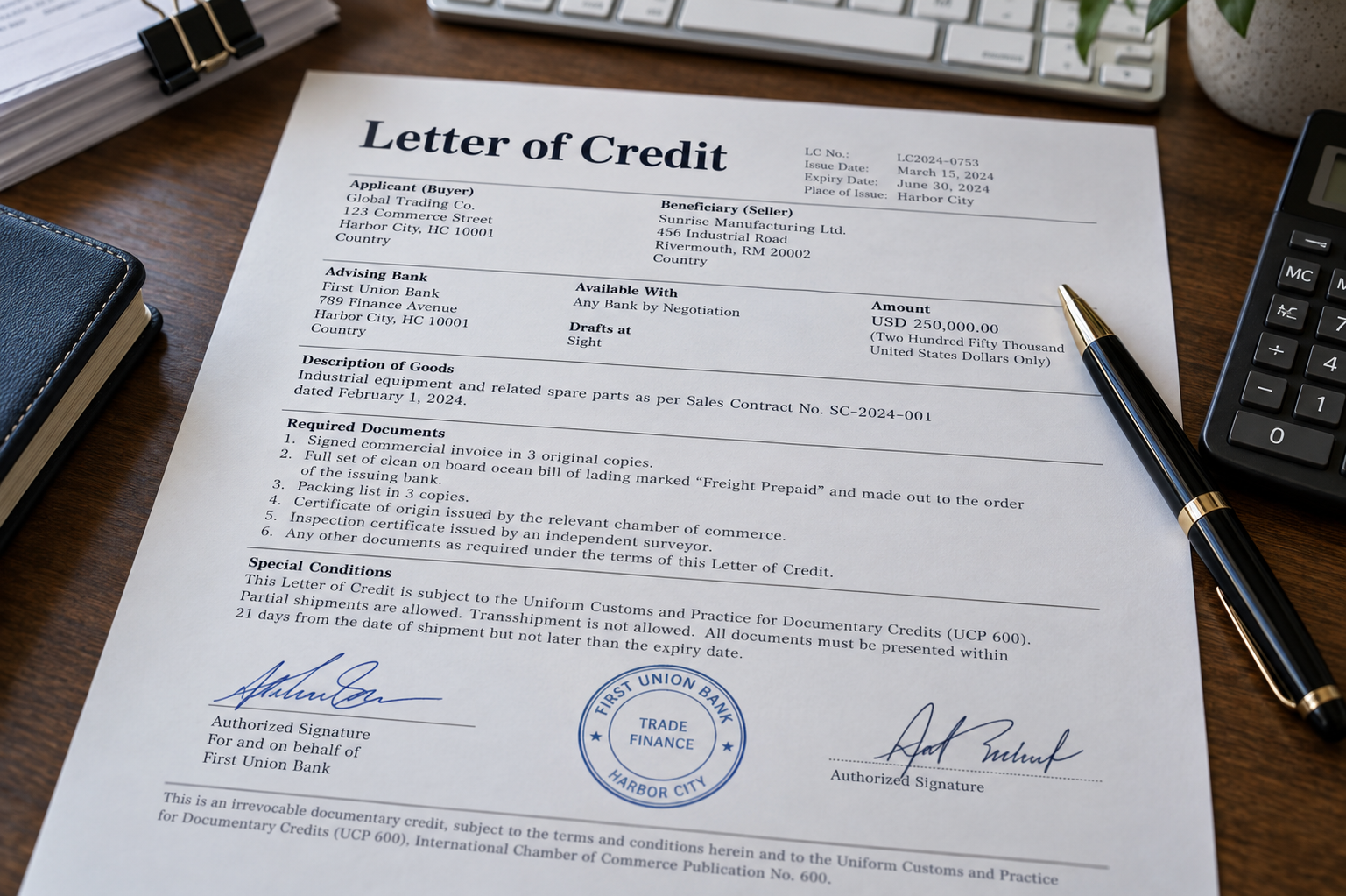
A letter of credit (LC) is a financial document issued by a bank on behalf of a buyer, guaranteeing that a seller will receive payment once specific conditions are met. It acts as a formal commitment from the issuing bank, not from the buyer directly. This distinction matters enormously in practice.
Think about sourcing from a factory in Guangzhou for the first time. The supplier doesn’t know you, doesn’t trust your ability to pay, and won’t ship $200,000 worth of goods on a handshake. Meanwhile, you’re not about to wire funds before seeing the products loaded onto a vessel. A documentary credit bridges exactly this trust gap, placing a reputable financial institution as the guarantor between both parties.
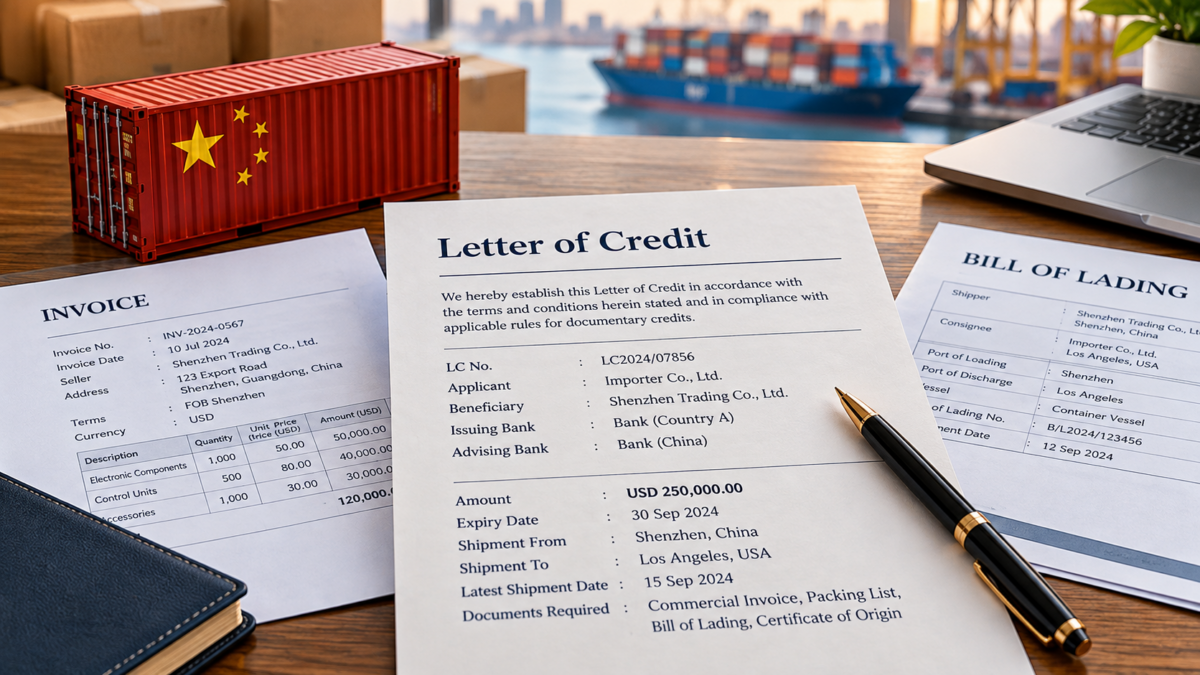
The core principle is simple : the bank promises to pay the exporter if and only if the documents presented match precisely what the LC specifies. Those documents typically include a commercial invoice, bill of lading, packing list, and sometimes certificates of origin or inspection reports.
When managing supplier compliance across multiple SKUs and factories, verifying that these documents align with purchase order terms is a daily operational reality.
Letters of credit are governed by the UCP 600 rules (Uniform Customs and Practice for Documentary Credits), published by the International Chamber of Commerce in 2007 and still the global standard today.
These rules define how banks interpret documents and handle discrepancies, making the LC one of the most standardized instruments in international trade finance.
How a letter of credit works : the key parties and their roles

Understanding the mechanics requires knowing who does what. Four main actors interact in a standard LC transaction :
| Party | Role | Responsibility |
| Applicant (buyer/importer) | Requests the LC from their bank | Defines conditions, pays bank fees |
| Issuing bank | Issues the LC on behalf of the buyer | Guarantees payment if documents comply |
| Advising/confirming bank | Located in the exporter’s country | Notifies seller, may add its own guarantee |
| Beneficiary (seller/exporter) | Receives payment upon compliance | Prepares and submits required documents |
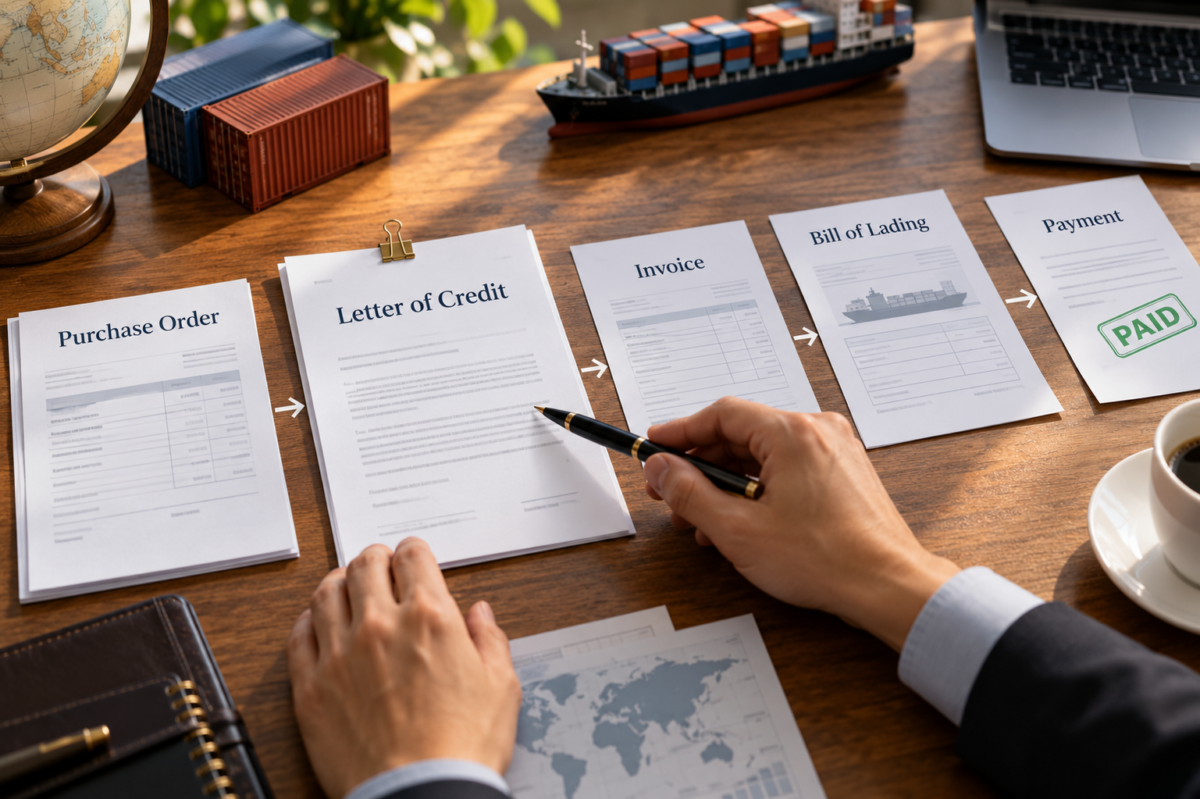
The process flows in a clear sequence. Once the buyer and seller agree on trade terms, the buyer applies for an LC at their bank. The issuing bank then transmits the LC to the advising bank in the exporter’s country.
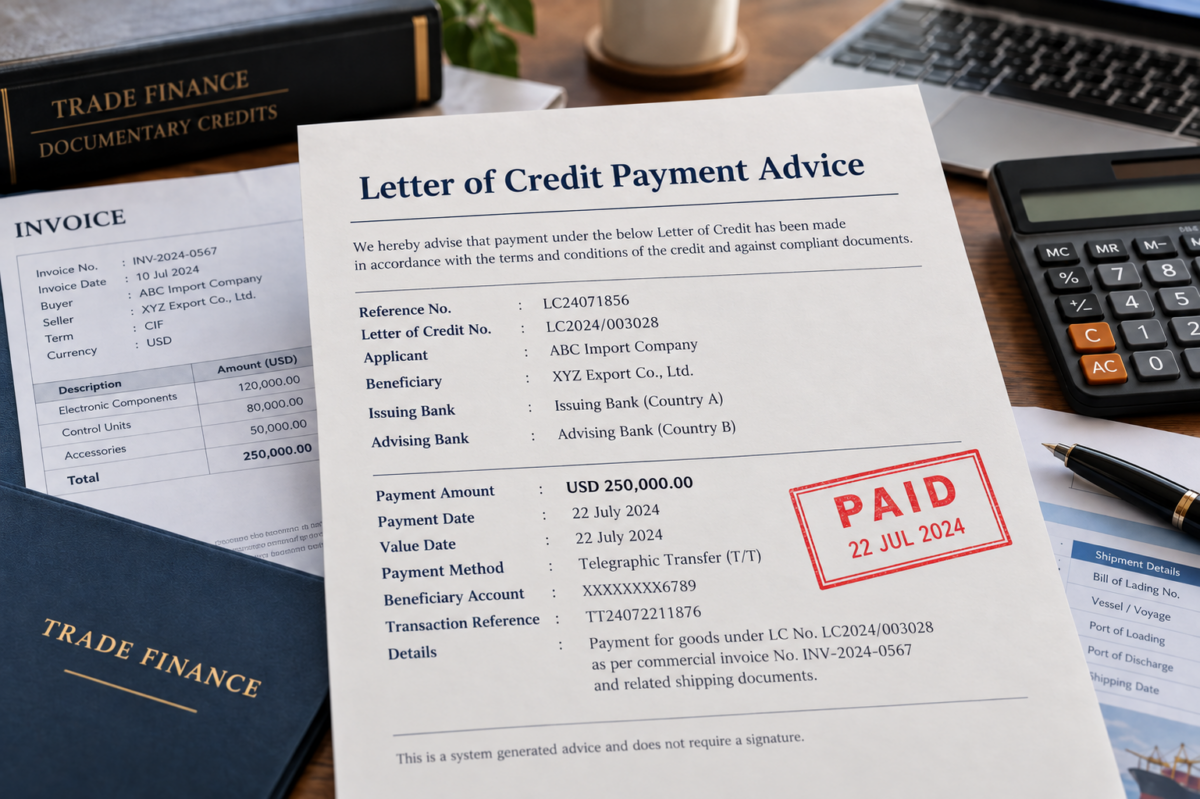
The seller ships the goods, compiles the required documents, and presents them to the advising bank, which forwards everything to the issuing bank for verification. If documents are compliant, payment is released within the agreed timeframe, usually five banking days under UCP 600.
When sourcing from Chinese manufacturers, a common complication arises : factories sometimes struggle to produce perfectly compliant documentation. Even minor discrepancies, like a date format or a weight unit, can trigger a refusal and delay payment by weeks. Having a structured document checklist before shipment is not optional, it’s operational discipline.
The different types of letters of credit you’ll encounter
Not all LCs work the same way. Choosing the wrong type for your transaction can expose you to unnecessary risk or unnecessary costs. Here are the main variants used in international procurement :
- Irrevocable LC : Cannot be amended or cancelled without all parties’ consent. The standard choice for most commercial transactions.
- Confirmed LC : The advising bank adds its own payment guarantee, protecting the exporter even if the issuing bank defaults. Particularly relevant when dealing with banks in politically or economically unstable regions.
- Transferable LC : Allows the first beneficiary (often a trading company) to transfer part of the credit to a second beneficiary, typically the actual manufacturer. Common in multi-tier Chinese supply chains.
- Standby LC : Functions more like a bank guarantee. Payment is triggered only if the buyer fails to fulfill their obligations, often used in long-term supplier agreements.
- Revolving LC : Automatically reinstates after each utilization, useful for recurring orders with the same supplier over a fixed period.
For buyers managing high-volume procurement from Asia, the transferable and revolving structures often deliver the most operational efficiency. They reduce administrative friction when placing repeated orders with a stable supplier base, something that becomes obvious once you’re tracking dozens of shipments simultaneously on a centralized dashboard.
Practical considerations before opening a letter of credit
Before instructing your bank to issue an LC, several factors deserve careful analysis. Bank fees typically range from 0.5% to 2% of the credit value, depending on the issuing bank, the country of the beneficiary, and the tenor (payment timeline). These costs accumulate fast on large orders.
Equally important is the quality of your LC terms. Vague or overly strict conditions create problems on both sides. Specifying the exact document titles, accepted tolerances on quantities, and precise shipment windows prevents the most common discrepancy issues.
When you’re coordinating logistics, quality control, and supplier compliance at the same time, a poorly drafted LC becomes a bottleneck you cannot afford.
One underestimated advantage of using documentary credits is the data trail they generate. Every document submitted, every bank communication, every compliance check creates a structured record of the transaction.
For buyers who maintain a detailed view of their supply chain at all stages, this paper trail integrates naturally into broader tracking systems and simplifies dispute resolution if problems arise later.