


In 2023, the International Chamber of Commerce estimated that letters of credit supported over $2.8 trillion in global trade transactions. For any business importing goods, particularly from manufacturing hubs like China, understanding letter of credit payment mechanics is not optional, it’s a competitive advantage.
What is a letter of credit and how does it work ?
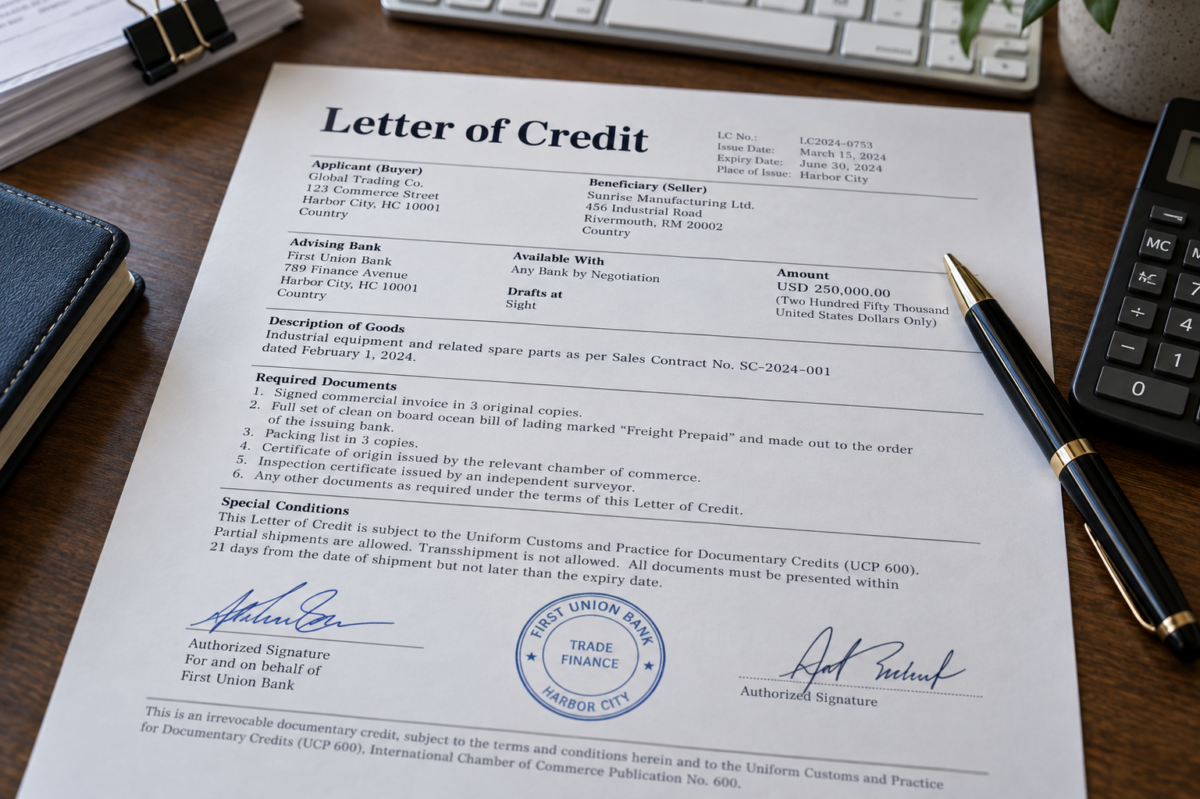
A letter of credit (LC) is a financial instrument issued by a buyer’s bank, guaranteeing that a seller will receive payment once they fulfill specific documentary conditions. It acts as a contractual bridge between two parties who may not fully trust each other, which is exactly the situation when sourcing internationally.
The bank substitutes its own creditworthiness for that of the buyer, which fundamentally changes the risk equation for the exporter.
Four main actors are involved in every LC payment process :
- The applicant : the buyer who requests the LC from their bank
- The issuing bank : the buyer’s bank that creates and guarantees the LC
- The beneficiary : the seller who receives the payment guarantee
- The advising/confirming bank : a bank in the seller’s country that verifies and sometimes confirms the LC
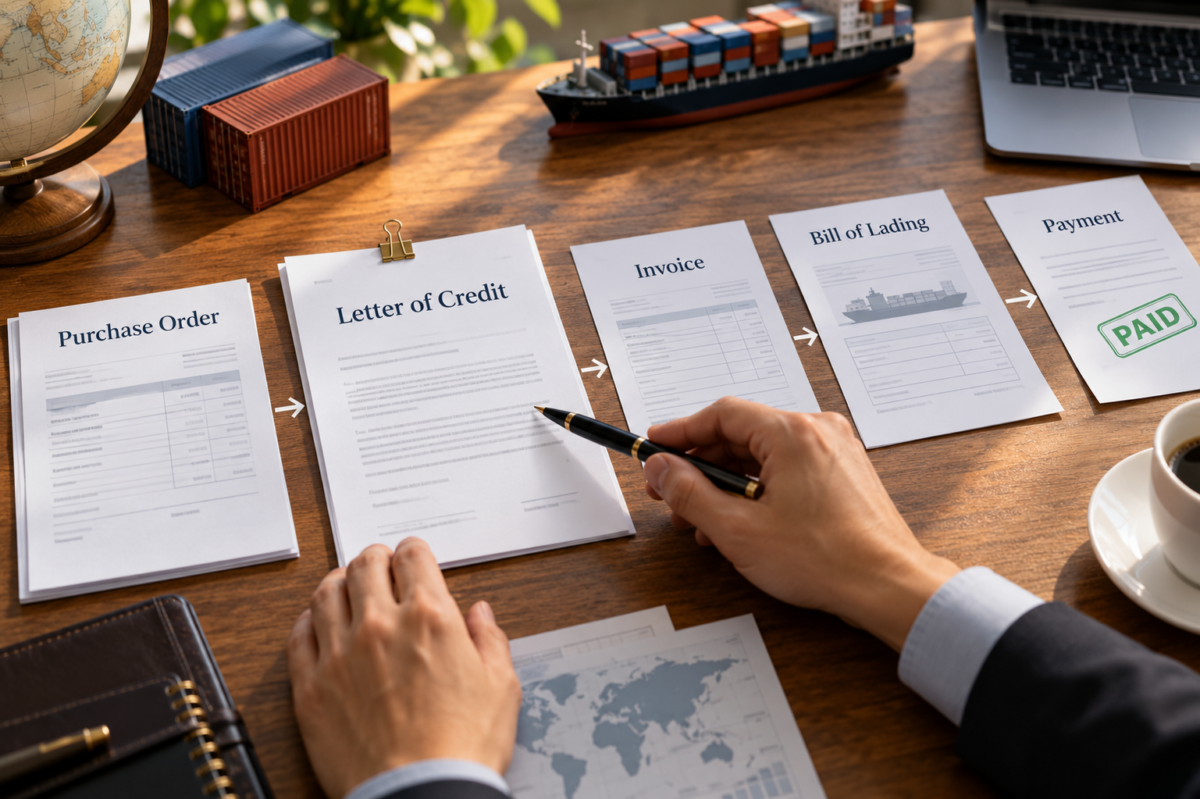
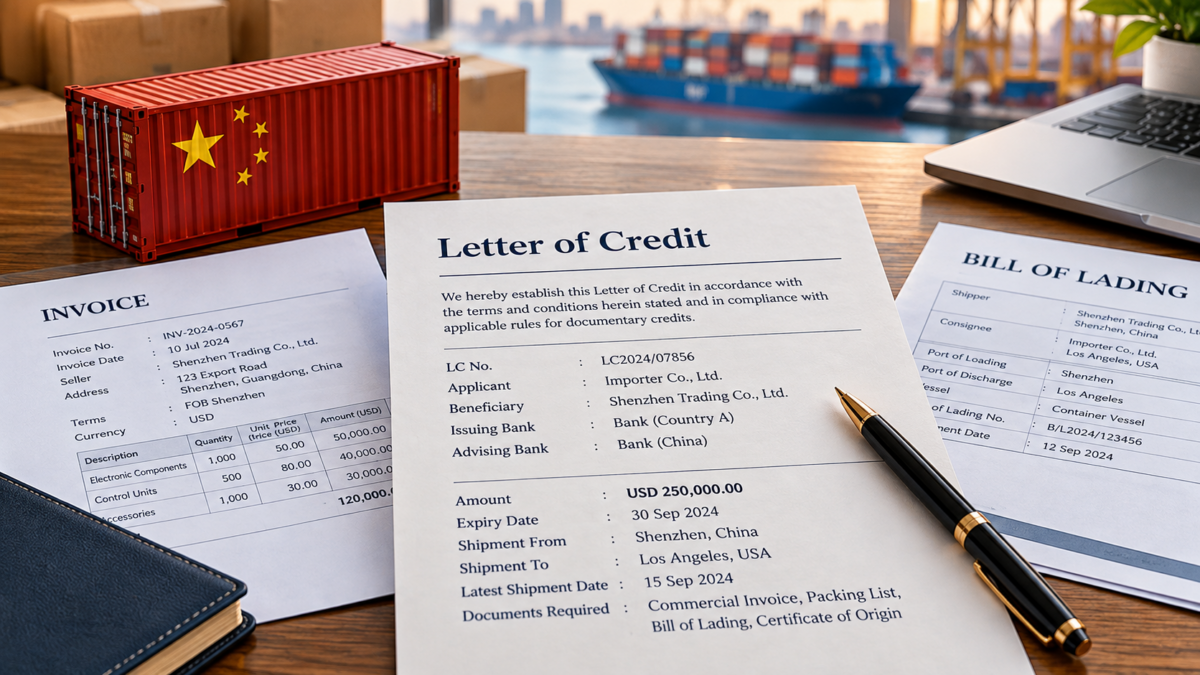
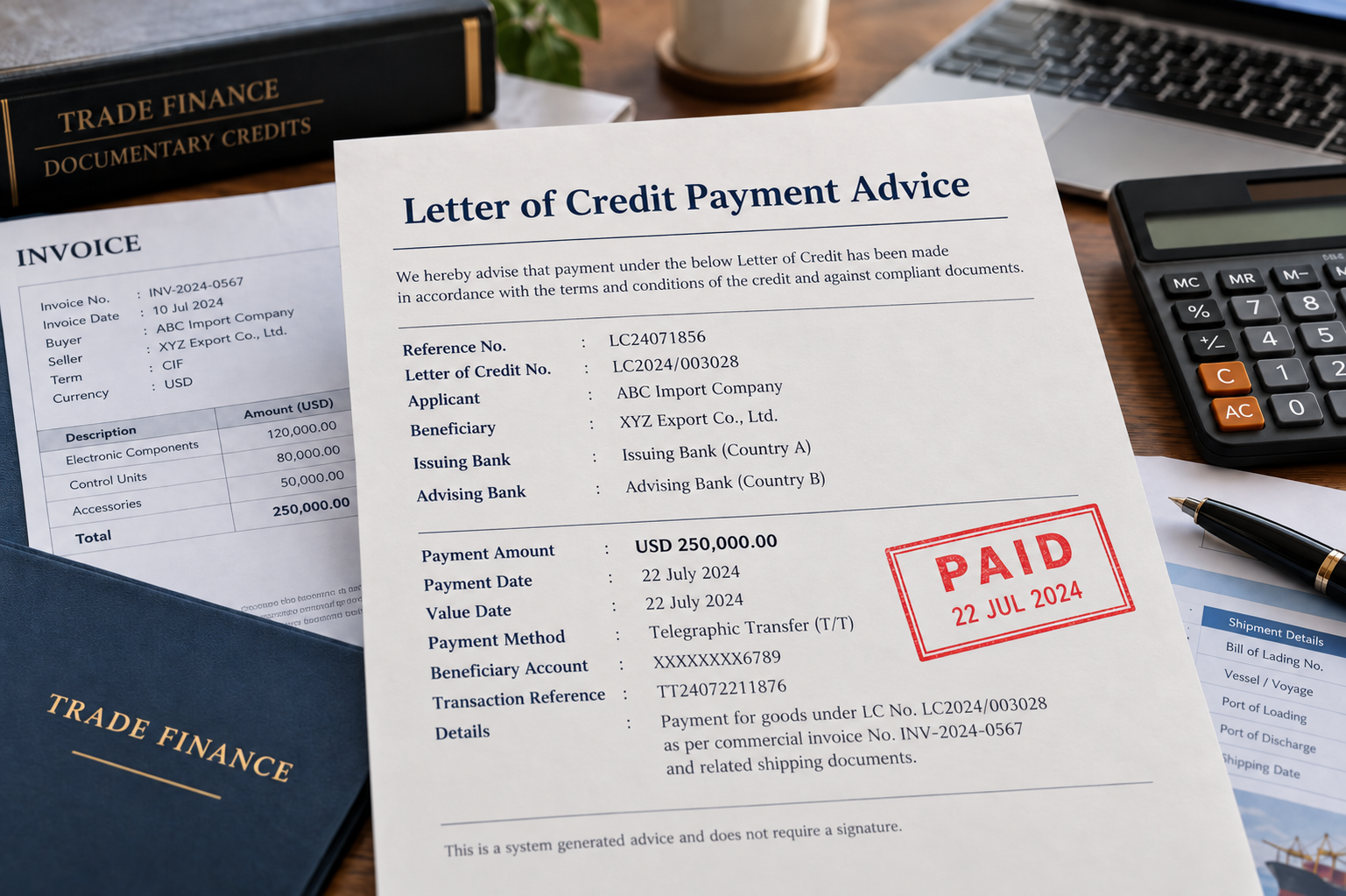
The mechanism only triggers payment when the seller presents a compliant set of documents, typically a commercial invoice, bill of lading, packing list, and certificate of origin.
Any discrepancy, even a minor spelling error, can block the payment. This is why meticulous document preparation matters so much when managing cross-border supply chains.
When you’re coordinating shipments from Chinese factories, having full visibility over documentation deadlines is critical. A dedicated supply chain dashboard helps track each document’s status before the LC expiry date, preventing costly discrepancies that delay funds.
The main types of letter of credit payment
Not all LCs are identical. The type chosen directly affects risk distribution between buyer and seller, as well as the cost and complexity of the transaction. Choosing the wrong variant for your trade context can expose you to unnecessary financial risk.
| Type of LC | Key feature | Best for |
| Revocable LC | Can be modified without the beneficiary’s consent | Rarely used today; high risk for seller |
| Irrevocable LC | Cannot be changed without all parties’ agreement | Standard for most international trade |
| Confirmed LC | A second bank adds its guarantee to the LC | High-risk countries or unknown issuing banks |
| Standby LC | Used as a backup payment mechanism | Long-term supplier relationships |
| Transferable LC | Beneficiary can transfer rights to a third party | Intermediaries and trading companies |
The irrevocable confirmed letter of credit is by far the most secure option for sellers. When sourcing from suppliers in China, a confirmed LC adds a local bank’s guarantee on top of the Chinese importer’s bank, which significantly reduces exposure to country risk or currency restrictions.
For buyers, this extra security comes at an additional banking cost, typically 0.5% to 1.5% of the transaction value.
Standby LCs deserve special attention. Unlike a traditional LC activated by document presentation, a standby LC only comes into play if the buyer fails to pay.
It functions more like a guarantee than a payment method, making it ideal for established supplier relationships where trust has been built over several sourcing cycles.
Step-by-step walkthrough of the LC payment process

The LC payment workflow follows a structured sequence. Each step must be executed correctly to avoid delays or discrepancies that hold up funds, sometimes for weeks.
First, buyer and seller agree on LC terms within the sales contract, specifying the currency, expiry date, port of shipment, and required documents. The buyer then applies to their bank, submitting the sales contract and any required collateral. The issuing bank reviews the application and, if approved, transmits the LC to the advising bank in the seller’s country.
Once the seller receives and verifies the LC, they prepare the shipment and gather all required documents. This stage is where supply chain coordination becomes decisive. A single mismatch between the LC terms and the documents, the wrong Incoterm on the invoice, an incorrect port name on the bill of lading, creates a discrepancy that the bank will reject.
After the seller presents the compliant documents to their bank, the document verification process typically takes 5 banking days under UCP 600 rules, the ICC’s Uniform Customs and Practice for Documentary Credits, in force since 2007. Once verified, the issuing bank releases payment to the seller’s bank, which credits the beneficiary’s account.
Managing this process manually across multiple suppliers is genuinely complex. A structured tracking system, the kind that maps each document against LC requirements in real time, dramatically reduces discrepancy rates.
For buyers handling several concurrent orders from Asian suppliers, centralizing LC document tracking within a single operational dashboard is the difference between smooth settlements and expensive renegotiations.
Practical tips to reduce LC payment risks and costs
One recurring mistake is treating the LC as purely a banking formality. It’s actually a precision instrument that demands commercial and logistical alignment. Request a draft LC from your bank before issuance, and share it with your supplier for review. Catching a discrepancy in the draft costs nothing; catching it after shipment can cost you the entire transaction value.
Negotiate reasonable presentation periods. UCP 600 sets a default of 21 days after the shipment date to present documents, but complex logistics from Chinese ports sometimes push document availability beyond this window. Explicitly extending this period in the LC terms prevents last-minute scrambles.
Finally, keep your banking relationships and LC structures under active review. As your sourcing volume grows, you may qualify for reduced LC fees or pre-approved LC lines that accelerate issuance. Visibility over your payment performance data, including discrepancy rates per supplier, gives you real leverage to renegotiate both supplier contracts and banking conditions.