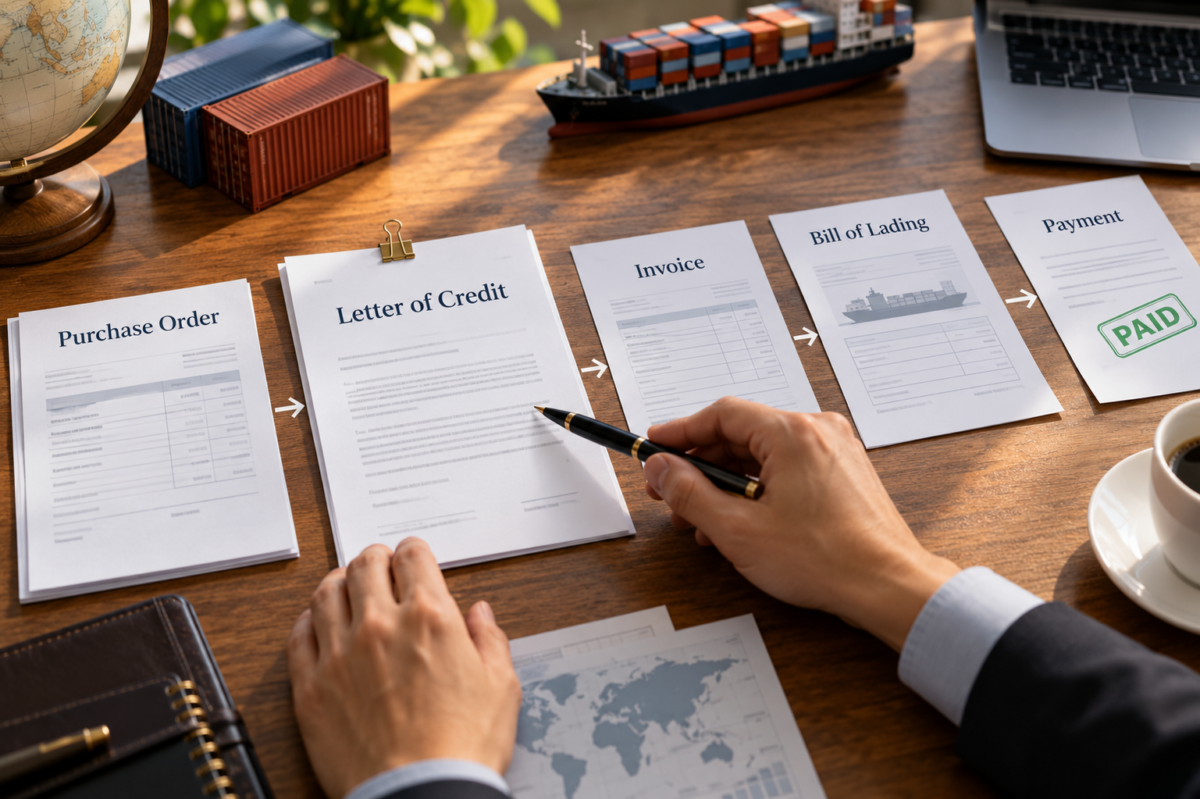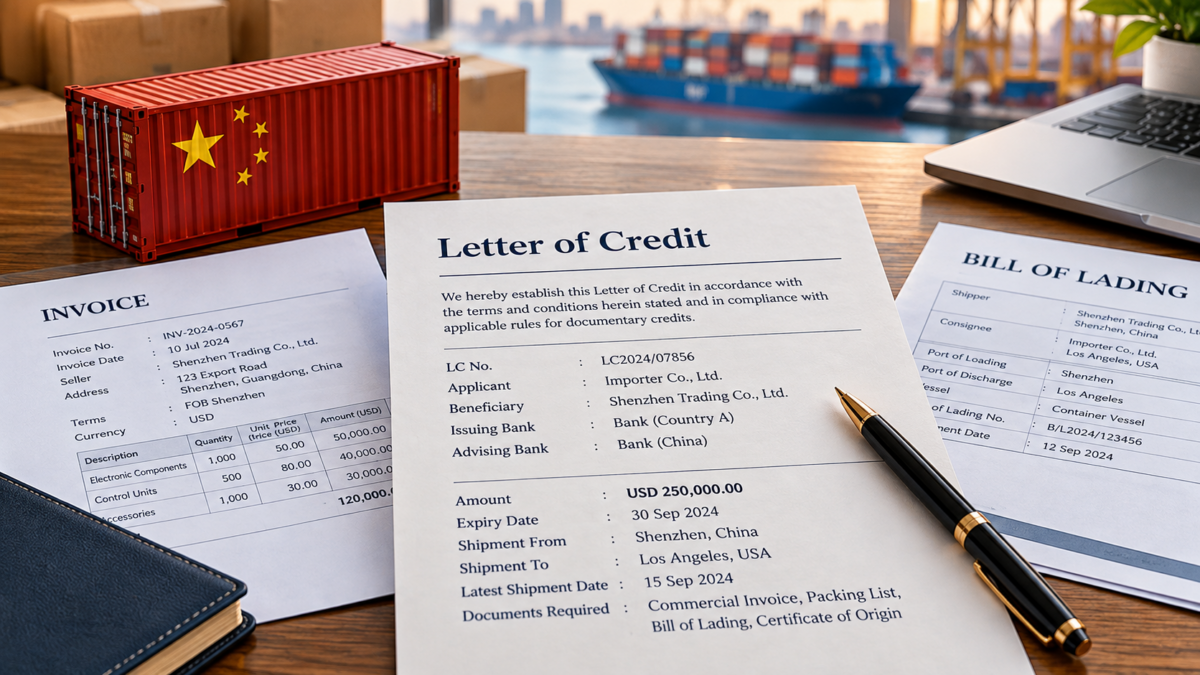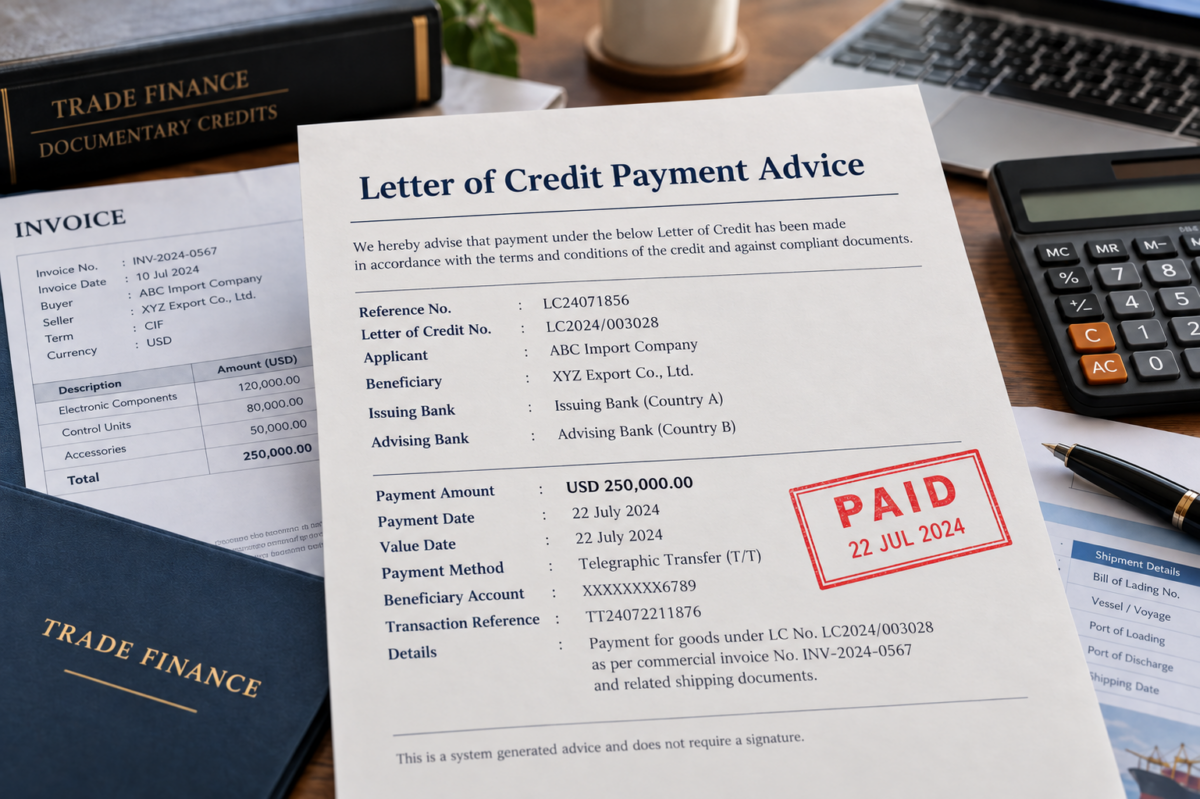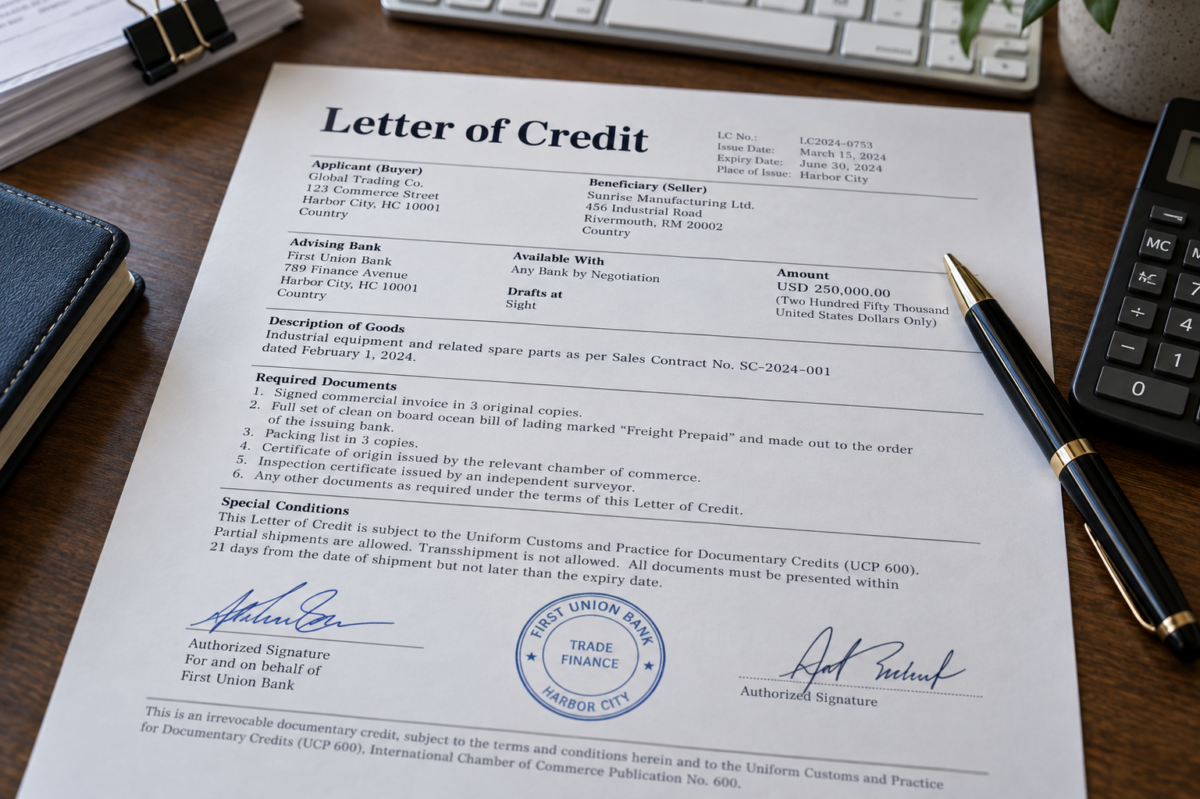



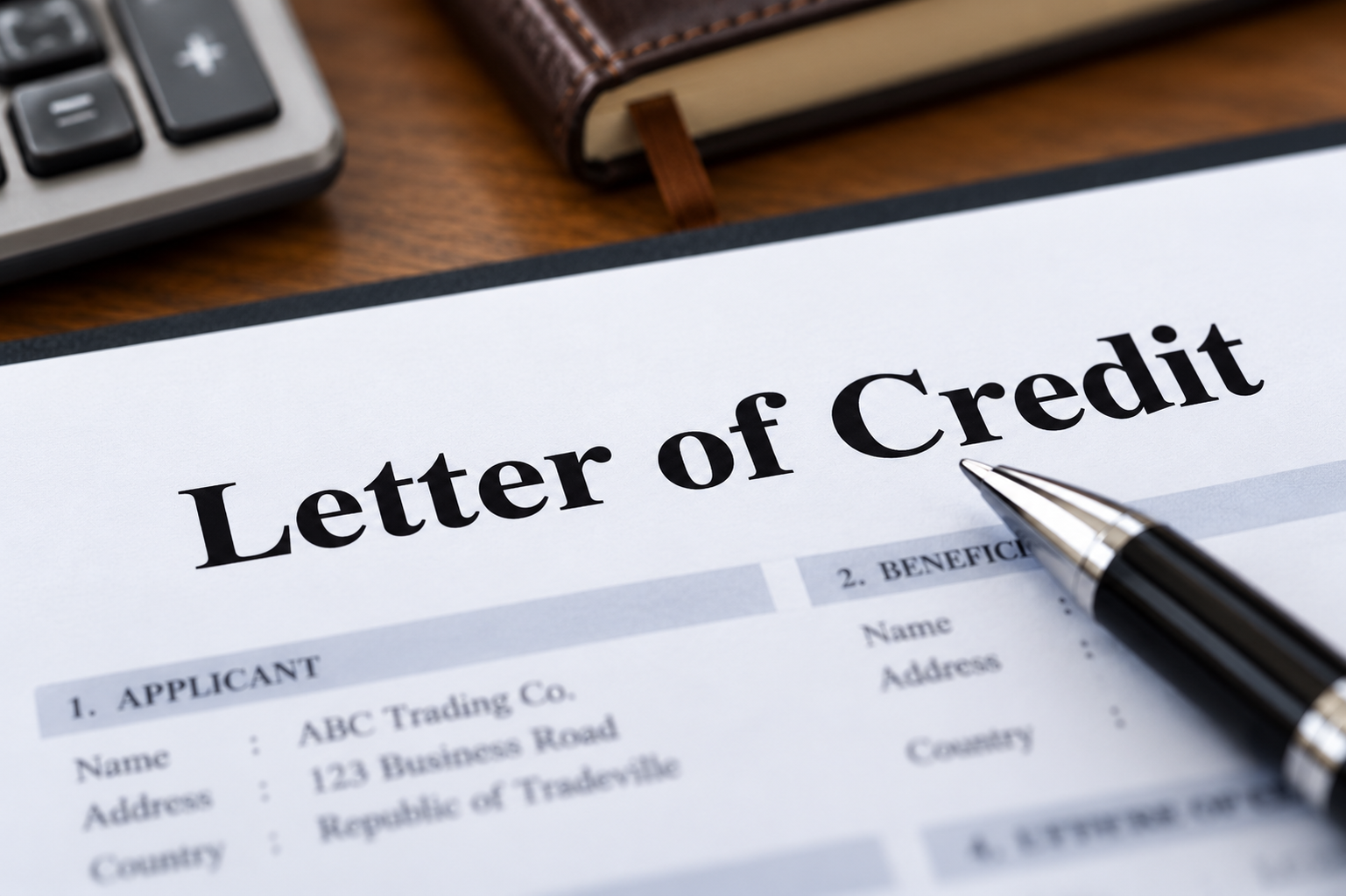
A letter of credit, or LC, is a bank’s undertaking to pay a seller when the seller presents documents that meet the credit’s requirements. In international sourcing, it gives the supplier a payment commitment from a bank while allowing the buyer to define the documents required for payment. A commercial documentary credit does not guarantee the physical quality of the goods. So What is a letter of credit?
For example, a manufacturer may be unwilling to ship a first order without payment security. The buyer may be equally reluctant to transfer the full purchase price before shipment. An LC can provide an agreed framework between those positions, provided both parties can meet its requirements.
In practice, arranging an LC involves more than dealing directly with a factory and the buyer’s bank. The documentary terms must match what the supplier can actually manufacture, inspect and ship.
MWT Sourcing helps bridge that gap by coordinating the buyer, supplier and operational sourcing milestones. We support the preparation of the commercial information needed for the banking process; only the issuing bank approves and issues the LC.
What is a letter of credit and who is involved
The buyer, known as the applicant, asks its bank to issue the credit. The issuing bank takes on the payment undertaking. The seller is the beneficiary. An advising bank checks the apparent authenticity of the credit and passes it to the seller.
Advising a credit does not automatically mean guaranteeing payment. A confirming bank adds its own undertaking when confirmation is arranged. A nominated bank is the bank with which the credit is available; its role depends on the terms and what it agrees to do.
Consider a UK buyer ordering goods from China. The issuing bank would normally be the buyer’s bank, not the Chinese supplier’s bank. If a second bank confirms the credit, the additional commitment benefits the supplier. It does not provide the UK buyer with an extra product warranty.
Commercial LCs commonly incorporate the International Chamber of Commerce’s UCP 600 rules. Those rules apply when the credit expressly says it is subject to them. They establish a shared framework, but the wording of the individual credit still matters.
What protection does an LC actually provide

The central benefit for the seller is a bank payment undertaking against a complying presentation. The buyer gains a structured documentary condition for payment, rather than relying solely on an advance transfer and the supplier’s promise.
However, the LC operates separately from the sales contract. Banks review documents; they do not visit the factory, count the cartons or test the finished product. A payment can therefore take place before the buyer receives and inspects the shipment.
If product quality matters, agree specifications, approve samples and arrange suitable inspections. An inspection certificate can be required under the LC, but its issuer and required content need to be carefully defined. The underlying inspection must also be meaningful: a certificate is only as useful operationally as the checks behind it.
This is why product quality control remains a separate part of a sound sourcing programme. It addresses the goods themselves, while the credit deals with the documentary payment conditions.
The main forms you may encounter
Different LC features answer different questions. Irrevocability concerns changes to the undertaking, confirmation concerns an additional bank commitment, and sight or deferred payment concerns timing. These features can be combined.
| Feature | Meaning | Practical question |
| Irrevocable | Cannot be unilaterally cancelled or amended | Have the required parties accepted the terms? |
| Confirmed | A second bank adds its undertaking | Does the seller need protection against issuing bank risk? |
| Payable at sight | Payment follows a complying presentation and processing | Will the buyer have funds available before delivery? |
| Deferred payment | Payment falls due at an agreed future date | Is the maturity date clearly defined? |
| Transferable | Expressly allows transfer under the applicable rules | Does an intermediary need a properly structured transfer? |
Under UCP 600, a credit is irrevocable even if it does not use that word. A standby letter of credit has a different commercial purpose: it generally serves as a backup if an obligation is not performed, rather than the normal payment route for each shipment. Standbys may use a different rule framework, such as ISP98.
How an LC compares with other payment methods
An advance transfer gives the supplier funds before shipment and places more performance risk on the buyer. Open account terms allow the buyer to pay later, increasing the seller’s exposure unless other protection is arranged.
A documentary collection uses banks to handle documents against payment or acceptance. It does not, by itself, create the issuing bank’s payment undertaking found in a documentary credit. This distinction matters when comparing a lower collection fee with the cost of an LC.
The appropriate choice depends on the supplier relationship, order value, product complexity, available bank facilities and the consequences of a failed delivery. There is no universal order-value threshold that makes an LC the correct answer. For a small repeat order, the administrative burden may outweigh the benefit; a first order for specialised tooling may justify closer scrutiny even at a lower value.
What to check before choosing a letter of credit

Start with the supplier’s ability to work with the instrument. Ask who prepares export documents, which bank will advise the credit and whether the proposed shipping timetable is workable. Request draft document formats rather than assuming every factory follows the same process.
MWT can help before the bank receives the final application by checking the supplier’s capacity to provide the proposed documents, clarifying the beneficiary’s identity and aligning inspection and shipping dates.
The buyer can then submit a more consistent operational plan to its bank. MWT does not issue, confirm or guarantee the credit, and all banking terms must be agreed with the relevant banks.
Then ask your bank about fees and security requirements. The bank may require a cash margin or an approved facility before issuance. An LC does not automatically provide unsecured funding, and a deferred payment date does not necessarily mean your cash remains unrestricted until maturity.
MWT Sourcing helps buyers prepare for a letter of credit by connecting supplier selection, production follow-up, document feasibility and quality checks. Through our supplier management service, we coordinate operational information between buyer and supplier so the proposed LC conditions reflect what the factory and logistics process can deliver.
The buyer applies through its bank; only the bank decides whether to approve, issue or amend the credit, and banks remain responsible for documentary examination.
Two practical use cases
These fictional scenarios illustrate purchasing decisions and are not MWT client case studies.
A first order for custom packaging
A cosmetics brand plans to buy USD 75,000 of custom packaging from a new overseas supplier. The factory wants payment security before shipment, while the brand wants documentary conditions before settlement. An LC may help address that payment concern.
A separate factory audit assesses production capability. The buyer uses both checks because a bank undertaking cannot establish whether the factory can manufacture the approved packaging consistently.
A repeat purchase from an established supplier
A wholesaler places a small repeat order with a factory that has delivered reliably. Before requesting another LC, it compares banking charges, administrative work and the risk of alternative payment terms. Its sourcing plan considers the order’s importance as well as its value.
The buyer and supplier might retain the LC or agree a different method; past reliability informs the decision without eliminating future risk.
Frequently asked questions
Is a letter of credit the same as a bank loan
No. It is a conditional bank payment undertaking. Financing may be provided alongside it, but that requires its own agreement and can involve additional costs.
Does the supplier have to wait until the goods arrive
Not usually. Payment follows the LC’s documentary requirements and payment terms. Arrival at the buyer’s premises is not automatically part of those conditions.
Planning an overseas purchase using an LC? Discuss your project with MWT so we can help align your supplier, inspection, shipping and document requirements before you submit the operational details to your bank. Your bank remains responsible for LC issuance and banking decisions.